

Jun 25, 2025
2 min read
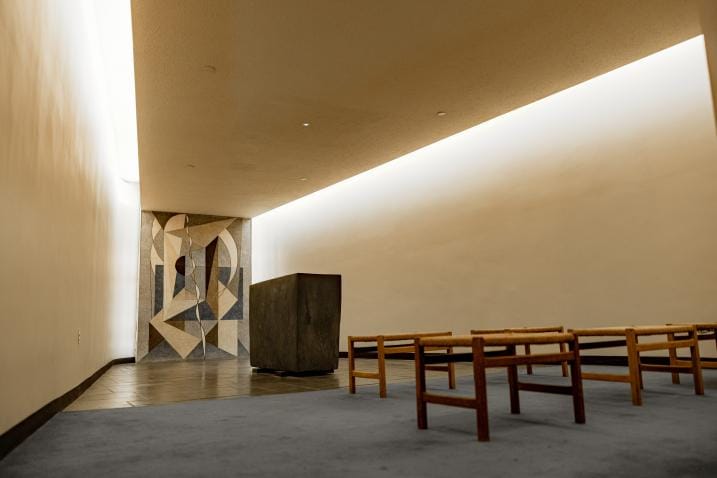
Not every home needs a meditation room. But every home, and every workplace, hotel, clinic or school needs somewhere to withdraw. Somewhere unprogrammed, quiet and psychologically off-limits to interruption. In architectural terms, we often call this a "quiet room," but the principle is broader: how do we design for moments when a person simply needs to be alone, even if only for five minutes?
In contemporary design culture, stillness is often mistaken for minimalism. But quiet is not the absence of things, it’s the presence of care. A quiet room might contain nothing more than a chair, a low shelf and a lamp. Or it might include materials that soften acoustics, furniture that supports rest, and boundaries that reduce visual intrusion. The point is not aesthetics, but the conditions for mental recalibration.
What makes a space feel private isn't always its enclosure. Sometimes it’s where the door is positioned, how much of the outside world you can hear, or the way light filters in, diffuse and slow. Texture plays a role too: fabric that doesn’t echo, flooring that doesn’t clack, a surface you don’t mind resting your hand on.
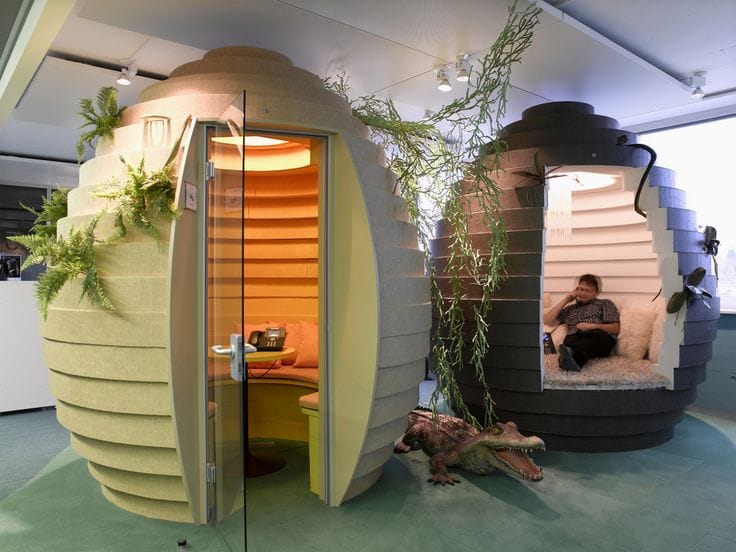
In healthcare environments, quiet rooms have long served as transitional spaces - places between procedures or between decision and action. In offices, they’re often added too late, or positioned near noisy circulation routes that undermine their purpose. In the home, they may exist only as corners: a window seat, a hallway bench, a room left intentionally underdesigned.
These details matter. Withdrawal is not about indulgence, but function. Especially in a world where overstimulation is embedded in our tools, interfaces and even the tempo of daily life. The brain needs rhythm, not constant input. Design can either accelerate that tempo, or soften it.
There’s a growing argument that restorative design is not a luxury, but an essential part of wellbeing, like sleep or nutrition. And yet in most spatial briefs, quiet still lacks language. It isn’t measured, valued or costed. But the demand for it is rising, quietly, all around us.
To design a quiet room is not to design a special feature. It’s to acknowledge that human beings need space not just to do, but to not do. To think, breathe, disconnect or simply sit. Stillness, in this context, is not an aesthetic trend. It’s a human need that design is just beginning to take seriously.